
G is for Ground Rules
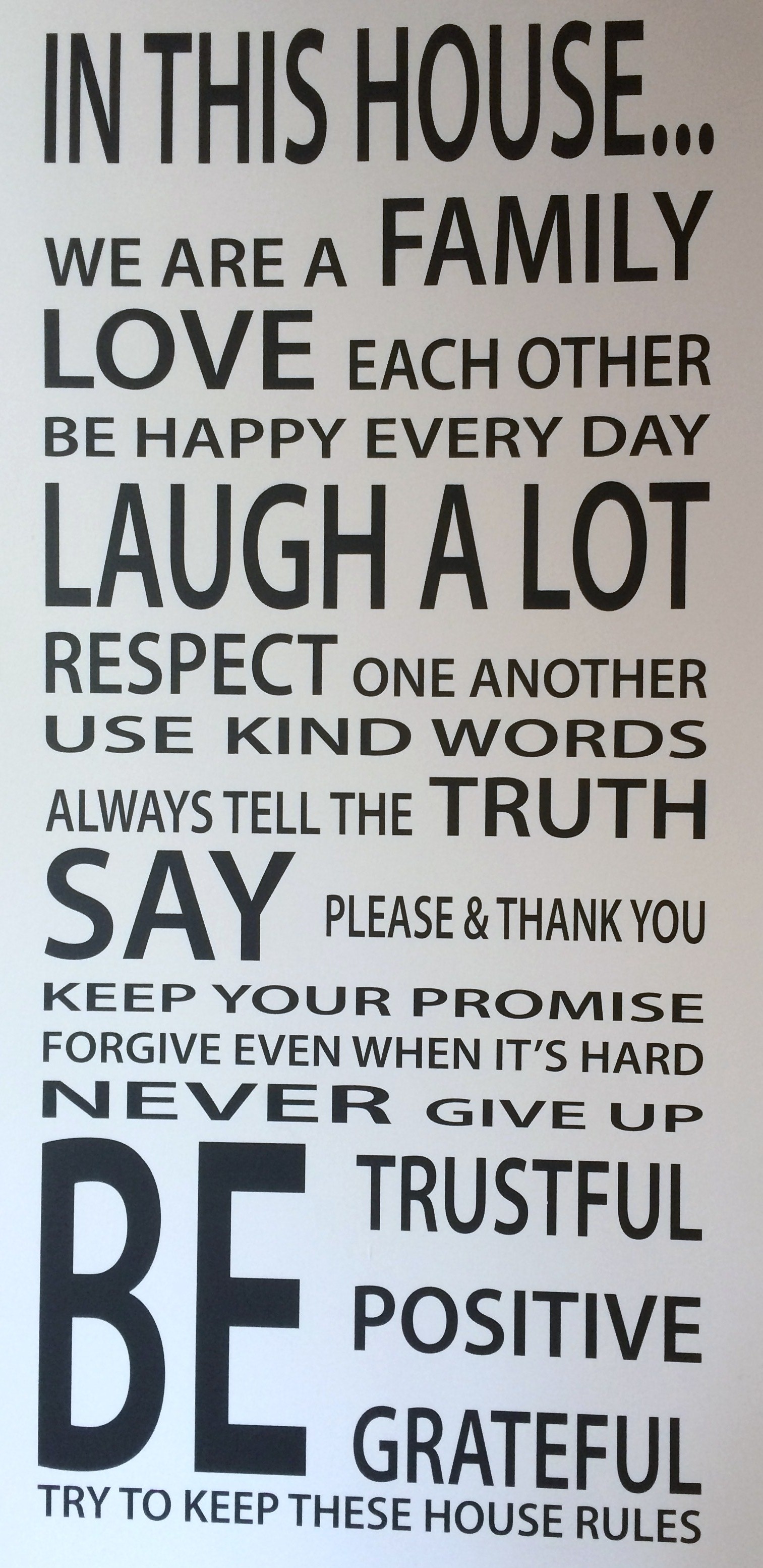 A couple of weeks ago I went to visit my sister and loved this set of house rules that she’d had painted on the wall in her kitchen. As with most things I come across that I like, I started to think about how they could be translated to business use. But of course we already use them. In business we refer to them as Ground Rules and that’s why I’m going to focus on them for this month’s newsletter. They establish expectations at an early stage in any relationship whether in business or in personal life. So if you’ve ever found yourself saying ‘I wish I’d started as I meant to carry on’ … read on!
So what are ‘Ground Rules’? I see them as providing us with a set of rules or boundaries for how we should conduct ourselves in a given situation, helping us to manage situations so that we get the best results. Whether you are facilitating a session at work, meeting a new team, or having some of your children’s friends over for a sleep over – you need to be thinking about setting some ground rules to help you as they really work for two reasons:
- when you involve the individuals concerned in the making of the ground rules, they buy in to the adoption of them
- the group who create the ground rules, often self-police them so that you don’t have to look the bad guy by imposing them as they will hold others to account on your behalf
Why did I want to focus on them? Well because they’re so simple to put in place, but I go to so many meetings, sessions or activities, where they don’t get created. This inhibits the progression of the session but also makes it more difficult for the person leading it. When people behave unprofessionally or do things that are frowned upon by the rest of the group, it’s down to one person, usually the chair, facilitator or organiser, to rectify the situation.
For example, have you ever been part of a group where one person always turns up late and then the chair has to update the person with what they’ve missed? Or you sit next to someone who is much more interested in their mobile phone than in the session and continues to text or email while the person speaking is trying to engage with everyone in the room? Setting ground rules in the early stages of a group/team forming will stop this kind of behaviour, because everyone has the same expectation of what is required. There are no definitive lists of what should be incorporated into a set of ground rules as they’re there to facilitate the smooth running of any activity, but one of my favourites is ‘if you’re in the room, be in the room’ ie give the session your 100% attention.
Once you have created your ground rules, it’s wise to check with everyone that they are happy they can observe and stick to them. For example, there may be some people in the group who are waiting for an important call, so it may be necessary for them to keep their phones on but to have it turned onto the vibrate mode instead. Once there is agreement from everyone – pin the list to the wall where everyone can see them. By being visible, it reminds everyone about what they should (or shouldn’t) be doing!
What to do when people violate the rules
It’s not good enough to just create the rules and put them up on the wall, if someone disrespects the rules you need to make them aware of it, in the best possible way, of course! I often play devil’s advocate when someone disrespects the rules. For example, if someone is continually interrupting others in the team and it has been highlighted as a ground rule, that we should actively listen to others and not interrupt – I often walk up to the set of ground rules and hold my hand near the relevant rule. This often does the trick in a light hearted way. If it doesn’t, it usually gets others to say something instead which refocuses the group. Of course there are some people who are intent on being disruptive despite setting ground rules. I was facilitating a session recently where one person blatantly disregarded the ground rules at every opportunity. When it came to one of the breaks we had a chat and I asked for their support in the session. Fortunately they realised that they were sabotaging the meeting and were much more positive for the remainder of the day, but I’ve also been in situations where this hasn’t been the case!
What can you do to make Ground Rules help you?
Make them a way of life – don’t put off doing them because you think others will think you’re silly. I’ve had people say ‘we’re all adults, so we’ll behave in that way’ – and they’re often the groups that are the hardest to facilitate as they all talk over one another, or someone hogs the air time and turns everyone off the subject being discussed.
Engage everyone in making them – ground rules only work when they have the buy in of everyone around the table. You can clarify them, but don’t impose them. They need to be a shared piece of work, whether that’s at work or home.
If it’s a struggle – sometimes, people need to be given a guiding hand as to what could go on their ground rules. I find the best way to do this is by getting them visualise a prior situation that worked really well or really badly and then define how we need to work (act or behave), if this session is going to work really well. You may need to check whether what they come up with is achievable.
Don’t make a big deal of them – I’ve seen some facilitators take a lot of time and effort to create ground rules, which makes everyone around the table worry that there are going to be some huge issues to overcome in the session. The main reason for setting ground rules is to consciously set some values or guidelines so that everyone knows how they should act.
Examples of some of the ground rules
- Treat each other with respect
- Avoid being defensive and give feedback in a constructive manner
- All team members to attend team meetings unless they are away from the office
- Meetings start promptly on time
- Minutes of meetings will be distributed within 24 hours of the meeting
- One person talks at a time; there are no side discussions
- Don’t have any hidden agendas
As I was writing this, my mind began to wander on to the Unwritten Ground Rules that are around us, but I think I’ll save that for the ‘U is for ….’ newsletter. Please give me your ideas of what you think H should stand for. At the moment we have got ‘honesty’ and ‘happy at work’