
Listening well
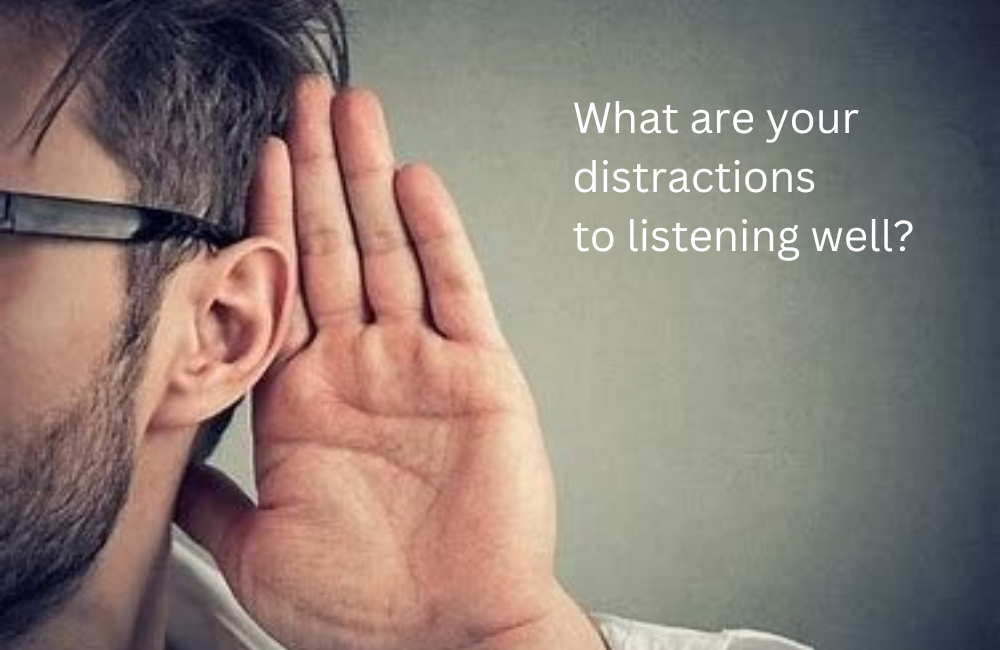
Being easily distracted during conversations is a common challenge and can stem from various sources. But understanding them and adopting strategies to overcome them can significantly improve our listening skills.
These are the ones we most often talk about in our programs – do you have any more to add?
 The distractions that are occurring in my head
- Have you ever been in that place where your mind has drifted to unrelated thoughts, concerns, or plans, which makes it difficult to focus on the speaker? If you notice this happening, gently bring your focus back to the speaker. I find that taking a few deep breaths can help you stay present.
- Or what about when you have a preconceived idea about the speaker or topic? I’ve had to really work on listening as if I’m going to tell someone else about the person or subject without any judgement.
- Our emotions, whether positive or negative, can cloud our ability to listen. When we find ourselves in this space it’s best to acknowledge how we feeling and then park them temporarily so we can focus on understanding the situation from the speaker’s perspective.
The external distractions
- Background noise or interruptions can easily divert our attention. It’s great if we can move to a quieter location or eliminate the source of the noise but sometimes this isn’t possible. This means we need to concentrate even harder to mentally block out the distraction.
- Phones, computers, and other gadgets can steal our attention even when we intend to listen. How many times have you picked up your phone without even realising and started to scroll when someone else is taking to you? Try turning off your notifications or put your devices away during important conversations. We have one program where delegates put their phones in a box at the beginning of the session and take them back on the way out. I think they love it as much as we do that there are fewer distractions. Plus, not being interrupted by the external world allows you to show respect for the speaker and maintain your focus.
- I used to work with one person who’s hunger as it approached lunchtime made it hard to pay attention. Physical discomfort, whether being too hot or cold, tired or wired, can also be a distraction. If you know your hunger can be a problem, take snacks. If getting too hot or cold is the problem, dress in layers that can be added or removed as necessary.
What about cognitive distractions?

- How many of us try to do a few things at the same time as we’re listening to others? My mother always calls me out on this! At the end of the day, we’re much better committing to one single task. Push whatever you’re doing and pay full attention to the speaker. You’ll get much more out of the conversation.
- Or what about having an idea whilst the other person is talking and you think about it so much that your own inner voice is louder than the voice of the person speaking. We all know the Stephen Covey quote of ‘listen to understand, not to respond!’
Lack of interest in the person or the subject
- It’s easy to lose focus when you’re not interested in the subject, or the person who’s speaking acts and behaves in a way that’s more distracting. The way I manage this is to try and engage more deeply with the topic so I can understand the message they’re trying to portray.
Techniques to Improve Listening Skills
- Active Listening: Engage with the speaker by nodding, making eye contact, and providing verbal affirmations. This keeps you involved and shows the speaker you’re attentive.
- Paraphrasing: Summarise what the speaker has said to confirm your understanding. This not only helps you stay focused but also clarifies the conversation.
- Note-taking: Jotting down key points can help keep your mind from wandering and serves as a reference for later.
- Regular Practice: Like any skill, focused listening improves with practice. Regularly put yourself in situations where you can practice these techniques.
By recognising and addressing these distractions, you can become a more effective listener, which improves communication and strengthens relationships.